
HT063-75 Electrical Slip Ring Technical Guide
Reliable electrical transmission is one of the most critical factors in modern rotating equipment. Whether used in industrial automation, laboratory testing systems, precision machinery, or specialized rotary platforms, a high-quality precision electrical slip ring helps maintain uninterrupted power delivery while minimizing electrical noise, wear, and maintenance requirements.
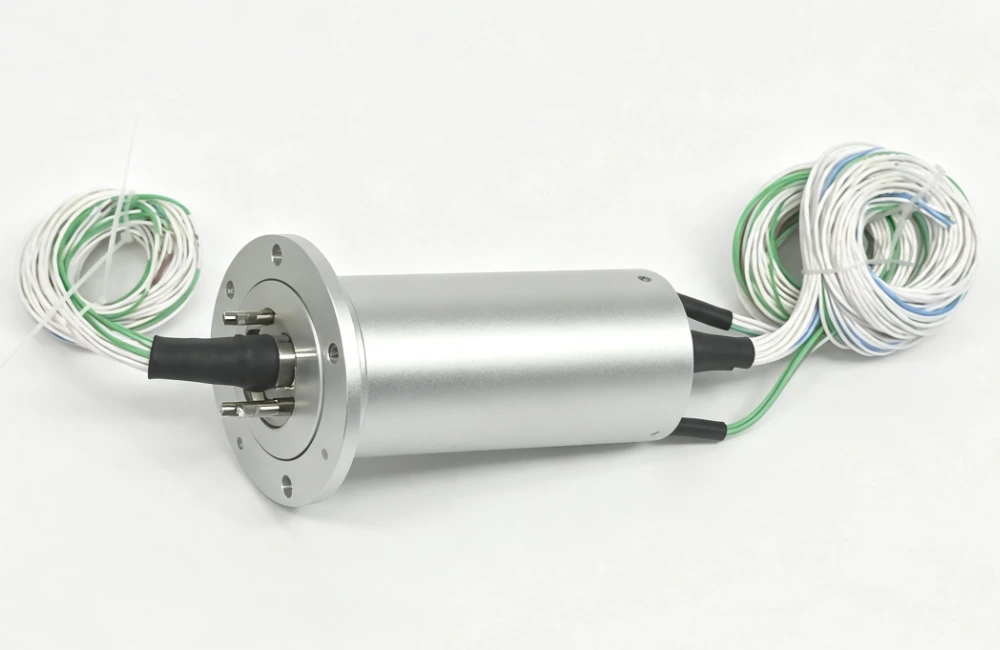
The HT063-75 Precision Electrical Slip Ring has been developed to provide dependable electrical connectivity between stationary and rotating components. Built with precious metal contact technology and a robust stainless-steel housing, it offers stable signal integrity, low contact resistance, and long-term operational reliability under continuous rotary motion.
Unlike conventional rotary connectors designed only for basic power transfer, the HT063-75 combines multiple electrical circuits with precision manufacturing, making it suitable for applications where transmission stability and service life are equally important.
Product Overview
The HT063-75 Precision Conductive Slip Ring is designed to transmit electrical power across rotating interfaces while maintaining continuous electrical contact throughout operation.
Designed for medium-speed industrial environments, the unit supports multiple independent electrical circuits with excellent electrical insulation, low dynamic resistance variation, and durable precious metal contact surfaces. These characteristics contribute to smooth operation, reduced signal interference, and extended service life.
Its compact flange-mounted structure also makes installation straightforward for equipment designers seeking reliable rotary transmission solutions without increasing system complexity.
Key Features
Stable Continuous Electrical Transmission
The HT063-75 ensures uninterrupted electrical conduction between rotating and stationary structures throughout continuous operation. Its precision contact system helps maintain consistent electrical performance while reducing transmission interruptions.
Precious Metal Contact Technology
All electrical contact surfaces utilize precious metal materials to improve conductivity, reduce friction, minimize oxidation, and extend operational lifespan. This design also contributes to lower electrical noise and improved transmission reliability.
Low Contact Resistance
Low static contact resistance and minimal dynamic resistance variation help improve power transmission efficiency while supporting stable signal quality in demanding industrial environments. Product specifications list a dynamic resistance variation of no more than 5 mΩ and a static brush-to-ring contact resistance of 15 mΩ or less.
Compact Flange-Mounted Design
The integrated flange mounting structure simplifies installation and mechanical alignment while supporting stable rotary operation within the specified operating speed range.
Industrial-Grade Stainless Steel Construction
Manufactured with a 304 stainless steel housing, the HT063-75 offers excellent mechanical strength and corrosion resistance for long-term industrial use.
Typical Applications
The HT063-75 Precision Slip Ring is suitable for a wide variety of industrial rotary systems that require reliable electrical transmission between rotating and stationary assemblies.
Typical application scenarios include:
- Industrial automation equipment
- Rotary indexing tables
- Precision manufacturing machinery
- Laboratory and testing systems
- Inspection and measurement equipment
- Packaging machinery
- Robotics and robotic joints
- Cable reels and rotating platforms
- Motion control systems
- Customized electromechanical equipment
Because of its stable electrical performance and compact mechanical design, the HT063-75 can also be integrated into customized OEM equipment requiring dependable rotary electrical connections.
Electrical Specifications
The following electrical specifications are provided according to the original product documentation.
| Parameter | Specification |
|---|---|
| Product Model | HT063-75 |
| Number of Circuits | 75 |
| Rated Current | 8 A × 6 circuits; 5 A × 1 circuit; 3 A × 68 circuits |
| Operating Voltage | 0–110 VAC/DC |
| Insulation Resistance | ≥ 500 MΩ @ 300 VDC |
| Dielectric Strength | 300 VAC, 50/60 Hz, 60 seconds |
| Dynamic Resistance Variation | ≤ 5 mΩ |
| Static Brush-to-Ring Contact Resistance | ≤ 15 mΩ |
| Contact Material | Precious Metal |
Why These Specifications Matter
The combination of multiple current ratings allows different electrical loads to be distributed across dedicated circuits, improving flexibility for complex equipment designs. High insulation resistance helps reduce leakage current, while low dynamic resistance variation contributes to stable electrical performance during continuous rotation.
The use of precious metal contact materials further enhances transmission quality by reducing wear, limiting oxidation, and maintaining reliable electrical contact over extended operating periods.
Mechanical Specifications
The HT063-75 Precision Electrical Slip Ring is engineered with a robust mechanical structure to ensure stable rotary performance in industrial environments. Its compact flange-mounted design allows easy integration into equipment requiring continuous electrical transmission while maintaining reliable mechanical alignment.
The following specifications are taken from the original product documentation.
| Parameter | Specification |
|---|---|
| Housing Material | Stainless Steel 304 |
| Operating Speed | 0–300 RPM |
| Protection Rating | IP51 |
| Rotational Torque | ≤0.3 N·m |
| Operating Temperature | -55°C to +80°C |
Durable Stainless Steel Construction
The housing is manufactured from 304 stainless steel, offering excellent structural strength and corrosion resistance. This material performs well in most industrial environments while maintaining dimensional stability during long-term operation.
For equipment operating in humid or mildly corrosive conditions, stainless steel construction helps extend service life and reduces maintenance requirements compared with standard carbon steel housings.
Stable Operation at Moderate Rotational Speeds
The HT063-75 is designed for continuous operation at rotational speeds ranging from 0 to 300 revolutions per minute. Within this operating range, the slip ring maintains stable electrical contact while minimizing friction and electrical resistance fluctuations.
Proper operation within the specified speed range helps maximize contact life and ensures consistent electrical performance over extended periods.
Low Rotational Torque
With a maximum starting and operating torque of 0.3 N·m, the slip ring places minimal mechanical load on the drive system. This characteristic is especially valuable in precision positioning equipment, servo-driven machinery, and automated systems where smooth rotation is essential.
Lower operating torque can also reduce energy consumption and improve overall mechanical efficiency.
IP51 Protection Rating
The HT063-75 features an IP51 enclosure rating, providing protection against dust accumulation that could interfere with normal operation while also resisting vertically falling water droplets.
Although suitable for many indoor industrial environments, installations exposed to heavy dust, water spray, or outdoor conditions should incorporate additional protective measures or dedicated enclosures to maximize operational reliability.
Environmental Operating Conditions
Industrial equipment frequently operates under demanding environmental conditions. The HT063-75 has been designed to function reliably across a broad temperature range, making it suitable for numerous industrial applications.
Wide Operating Temperature Range
Operating Temperature:
-55°C to +80°C
This wide temperature capability allows the slip ring to perform reliably in both low-temperature environments and high-temperature industrial installations without compromising electrical transmission stability.
Engineers should nevertheless ensure that surrounding equipment components, cables, and connectors are also rated for the intended operating environment.
Product Dimensions and Mounting Configuration
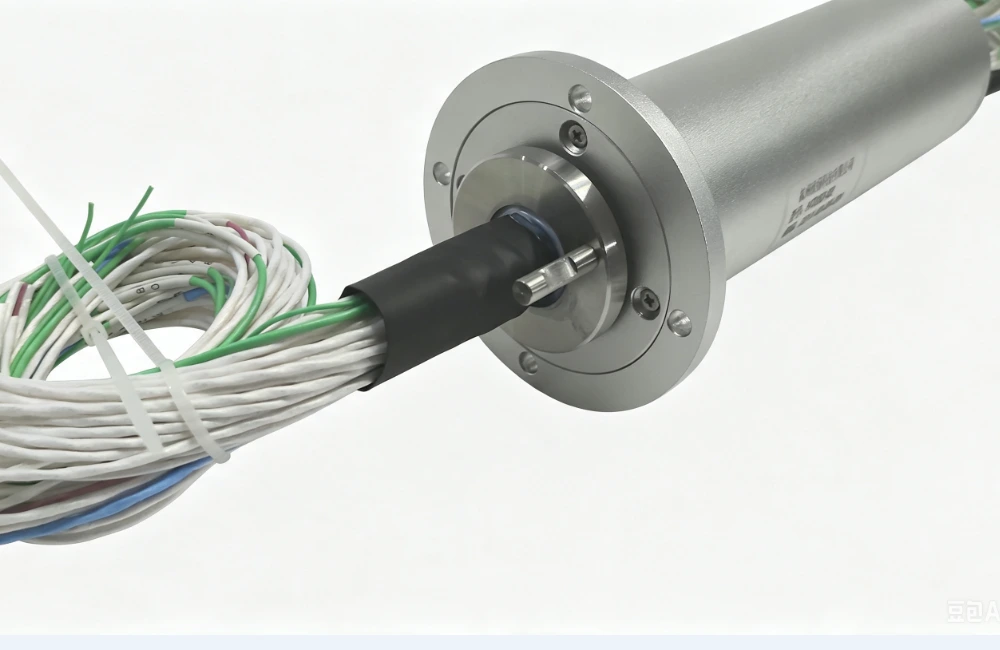
The HT063-75 utilizes a flange mounting design, allowing straightforward integration into rotating equipment.
According to the original installation manual, the rotor flange incorporates eight mounting holes with a diameter of 7 mm, arranged on a 75 mm pitch circle diameter (PCD) with a 63 mm locating surface.
This standardized mounting arrangement simplifies installation while helping maintain concentric alignment between the rotating shaft and the slip ring assembly.
Installation Procedure
Following a systematic installation process helps ensure reliable operation and minimizes the possibility of premature component wear.
Step 1 – Verify System Shutdown
Before beginning installation, confirm that the equipment has been completely powered off and isolated from all electrical sources.
Working on energized equipment may damage the slip ring, connected devices, or associated control systems.
Step 2 – Inspect Mounting Surfaces
Before mounting the unit, inspect all mating surfaces carefully.
The mounting interface should be:
- Clean
- Dry
- Free from dust
- Free from grease
- Free from oil contamination
Clean interfaces contribute to accurate alignment and reliable mechanical fastening.
Step 3 – Secure the Rotor
Install the rotor flange using the specified mounting holes.
During tightening, apply uniform fastening torque to avoid uneven loading that could introduce mechanical stress or alignment errors.
Step 4 – Connect Electrical Interfaces
Carefully mate the customer-side connectors with the corresponding slip ring connectors.
Always verify connector orientation before insertion.
Never force a connector into position, as improper installation may permanently damage the connector assembly.
Step 5 – Perform Functional Testing
After installation is complete, conduct a controlled test run before placing the equipment into normal operation.
During commissioning, verify:
- Smooth rotation
- Stable electrical transmission
- Normal operating torque
- Absence of abnormal vibration
- No unusual mechanical noise
Only after successful testing should the equipment enter continuous service.
Installation Best Practices
Although installation is relatively straightforward, following several engineering best practices can significantly improve long-term reliability.
Avoid Excessive Mechanical Stress
The slip ring should never be used as a structural support component.
External radial or axial loads should be minimized to reduce bearing wear and maintain stable electrical contact.
Maintain Accurate Alignment
Proper shaft alignment reduces vibration, minimizes brush wear, and improves electrical transmission consistency.
Where possible, precision alignment tools should be used during equipment assembly.
Protect Electrical Connectors
Connector damage remains one of the most common causes of installation-related failures.
Always insert connectors gently while confirming the correct orientation.
Never rotate or twist connectors excessively during assembly.
Keep the Installation Area Clean
Dust, metal particles, oil residue, and moisture may negatively affect electrical performance over time.
Maintaining a clean installation environment helps maximize both electrical reliability and service life.
Respect the Design Limits
For optimum performance, always operate the HT063-75 within its specified electrical, mechanical, and environmental ratings. Exceeding these limits may reduce operational lifespan and affect transmission stability.
Frequently Asked Questions (FAQ)
What is the primary function of the HT063-75 Precision Slip Ring?
The HT063-75 provides continuous electrical transmission between rotating and stationary structures while preventing cable twisting during continuous rotation.
What contact material is used?
The electrical contacts utilize precious metal materials, helping reduce electrical noise, improve conductivity, and extend operating life.
What is the maximum operating speed?
The recommended operating speed is 0–300 RPM. Continuous operation within this range helps maintain stable electrical performance and long service life.
Is the HT063-75 suitable for outdoor installation?
The product is rated IP51, making it appropriate for many indoor industrial environments. Outdoor installations or applications exposed to heavy moisture, dust, or washdown conditions should incorporate additional environmental protection(waterproof slip ring).
Conclusion
Reliable rotary electrical transmission is essential to the performance of modern industrial equipment, and the quality of a slip ring directly influences system stability, maintenance intervals, and operational efficiency.
The HT063-75 Precision Electrical Slip Ring combines a compact flange-mounted design, precious metal contact technology, low electrical resistance, and durable stainless-steel construction to deliver dependable power transmission across rotating interfaces. Its 75 independent circuits, wide operating temperature range, and industrial-grade mechanical design make it well suited for a variety of automation, testing, and motion-control applications.
By following the installation procedures, operating recommendations, and preventive maintenance practices outlined in this guide, equipment manufacturers and maintenance engineers can maximize product reliability while extending service life.
See What We Can Do