
Introduction
In today’s industrial and high-tech environments, many machines rely on continuous rotation while simultaneously transmitting large amounts of data. Robotic arms, wind turbines, CT scanners, radar antennas, and automated inspection systems all need uninterrupted communication even as their components rotate. Traditional cabling often fails under these conditions due to twisting, wear, or limited flexibility. Wireless communication is sometimes an alternative, but it can introduce latency, interference, bandwidth limitations, or security concerns.
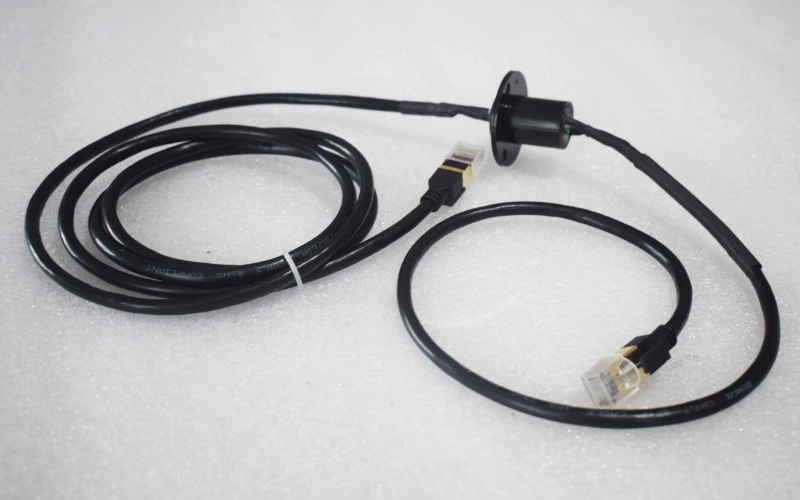
This is where an Ethernet slip ring becomes essential. An Ethernet slip ring is a specialized rotary connector that allows network signals—and often power—to pass seamlessly between stationary and rotating parts. By enabling continuous 360-degree rotation while maintaining reliable data transfer, Ethernet slip rings solve a critical challenge in modern industrial and commercial systems.
In this guide, we will explore:
- What an Ethernet slip ring is
- How it works and why it differs from traditional slip rings
- Key benefits and advantages
- Real-world applications
- How to choose the right model
- Frequently asked questions
By the end, you’ll understand when and why an Ethernet slip ring is necessary for your systems.
What Is an Ethernet Slip Ring?
An Ethernet slip ring—also known as a rotary Ethernet connector, network slip ring, or Gigabit Ethernet slip ring—is a rotary interface designed to transmit high-speed digital data through a rotating joint. Unlike conventional power slip rings, Ethernet slip rings are specifically engineered to handle network communication protocols such as Industrial Ethernet, EtherNet/IP, PROFINET, Modbus TCP, EtherCAT, and Gigabit Ethernet.
Key Features
- Continuous 360-degree rotation without cable twisting
- Reliable high-speed data transmission
- Simultaneous transmission of power and data in hybrid models
- Compact and durable design suitable for industrial environments
Essentially, an Ethernet slip ring acts as a bridge between a stationary structure (stator) and a rotating structure (rotor), allowing uninterrupted data flow even in high-speed or continuous motion applications.
Why Ethernet Matters
Ethernet is widely used because it offers:
- High bandwidth for large data volumes
- Low latency for real-time control
- Standardized protocols across devices
- Scalability for complex networks
- Cost-effective networking
In modern industrial setups, many machines generate massive amounts of real-time data. Maintaining Ethernet connectivity in rotating systems is crucial, and this is precisely what Ethernet slip rings enable.
How Does an Ethernet Slip Ring Work?
The Traditional Slip Ring Concept
Traditional slip rings consist of:
- Conductive rings mounted on a rotating shaft
- Stationary brushes that maintain contact with the rings
As the rotor spins, electricity passes through the brushes to the rings. This design has been used for decades in power transmission applications.
Challenges for High-Speed Ethernet
Transmitting digital Ethernet signals is more complex than transmitting power. High-speed data requires:
- Precise impedance control to prevent signal reflection
- Low electrical noise and minimal attenuation
- Stable contact resistance
- Protection from electromagnetic interference (EMI)
Even minor disruptions can cause packet loss, communication errors, and network slowdown.
Engineering Solutions
To address these challenges, modern Ethernet slip rings incorporate:
- Gold-to-Gold Contacts
- Reduce electrical resistance and contact noise
- Increase operational reliability
- EMI/RFI Shielding
- Protects signals from motors, inverters, and industrial interference
- Maintains signal integrity in high-noise environments
- Controlled Impedance Design
- Ensures consistent signal quality for Gigabit Ethernet
- Optimizes contact geometry, internal wiring, and connectors
- Hybrid Data and Power Channels
- Transmit Ethernet, power, USB, HDMI, and analog signals in a single device
- Simplifies system design and installation
By combining these features, Ethernet slip rings ensure smooth, uninterrupted data flow in rotating systems.
Types of Ethernet Slip Rings
Different applications require different slip ring designs:
Fast Ethernet Slip Rings
- Support 10/100 Mbps transmission
- Suitable for PLCs, basic automation, and low-bandwidth sensors
Gigabit Ethernet Slip Rings
- Support 1000 Mbps (1 Gbps) transmission
- Ideal for machine vision systems, industrial cameras, and advanced robotics
Multi-Channel Ethernet Slip Rings
- Transmit multiple Ethernet signals simultaneously
- Used in surveillance, multi-camera systems, and complex automation platforms
Hybrid Ethernet Slip Rings
- Combine Ethernet, power, USB, HDMI, and analog signals
- Reduce cabling complexity and installation footprint
Fiber Optic Ethernet Slip Rings
- Integrate fiber optic rotary joints (FORJ)
- Offer high bandwidth, immunity to EMI, and long-distance transmission
- Suitable for extremely high-speed networks or long-range industrial applications
Why Use an Ethernet Slip Ring?
1. Continuous 360-Degree Rotation
Without a slip ring, cables eventually twist or fail. Ethernet slip rings allow unlimited rotation while maintaining stable network connectivity.
2. Reliable High-Speed Data Transmission
Industrial equipment often generates high data volumes:
- HD video streams
- Machine vision inspection images
- Real-time sensor data
Ethernet slip rings ensure consistent, uninterrupted communication during rotation.
3. Reduced Maintenance Costs
Cable failures can cause:
- Unexpected downtime
- Expensive repairs
- Production losses
Installing an Ethernet slip ring significantly reduces maintenance frequency and improves system uptime.
4. Simplified System Design
Ethernet slip rings make it easier to design compact, organized systems:
- Better cable management
- Smaller installation footprint
- Easier assembly and integration
5. Harsh Environment Reliability
Industrial-grade Ethernet slip rings withstand:
- Dust and moisture
- Vibration and shock
- Temperature fluctuations
This makes them suitable for harsh industrial environments.
Ethernet Slip Ring vs Traditional Slip Ring
| Feature | Traditional Slip Ring | Ethernet Slip Ring |
|---|---|---|
| Primary Purpose | Power transmission | High-speed digital data transmission |
| Signal Quality | Basic | Optimized for Ethernet |
| Data Rate | Low | Up to Gigabit or higher |
| EMI Protection | Limited | Advanced shielding |
| Industrial Ethernet Support | No | Yes |
| Cost | Lower | Higher |
| Complexity | Simple | Advanced |
Key Takeaway: If your system depends on network communication, sensors, cameras, or Industrial Ethernet, an Ethernet slip ring is the preferred choice.
Ethernet Slip Ring vs Wireless Communication
Some engineers consider wireless alternatives. However, Ethernet slip rings usually outperform wireless in critical applications:
| Factor | Ethernet Slip Ring | Wireless |
|---|---|---|
| Reliability | Excellent | Variable |
| Latency | Very low | Higher |
| Bandwidth | High | Moderate |
| Interference Resistance | High | Lower |
| Security | Strong | Depends on network |
| Continuous Operation | Excellent | Variable |
Practical Assessment: Wireless may work for low-speed rotation or temporary solutions, but Ethernet slip rings are superior for mission-critical, high-speed, continuous applications.
Real-World Applications
1. Industrial Automation and Robotics
Applications include:
- Robotic welding cells
- Pick-and-place robots
- Rotary indexing tables
- Packaging machinery
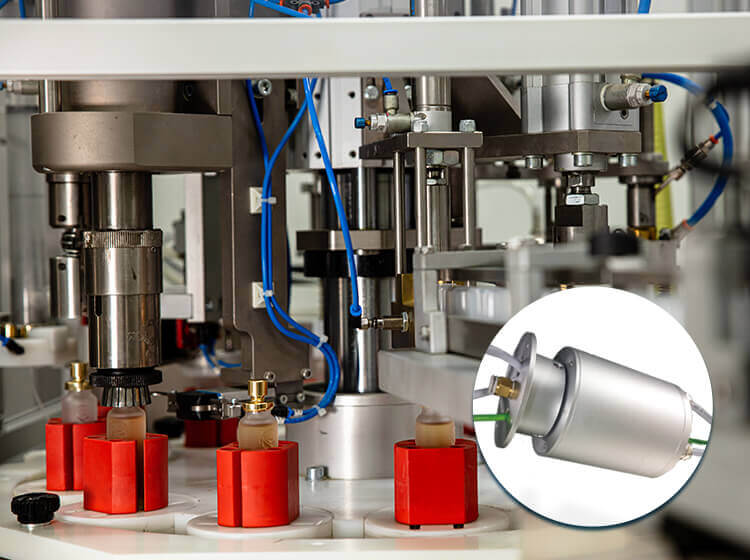
Example: A robotic assembly station rotates while transmitting camera images, motion commands, and production data. Ethernet slip rings prevent cable entanglement and signal loss.
2. Machine Vision Inspection Systems
High-speed inspection stations use:
- Gigabit Ethernet cameras
- Real-time image processing
- Rotating inspection platforms
Ethernet slip rings ensure smooth video transmission without interruption.
3. Wind Turbines
Sensors monitor:
- Blade condition
- Vibration levels
- Temperature and wind speed
Ethernet slip rings enable continuous real-time monitoring for predictive maintenance and optimized energy production.
4. Medical Imaging Equipment
CT scanners and MRI machines generate large datasets while rotating. Ethernet slip rings ensure:
- Fast image acquisition
- Reliable diagnostics
- Stable system performance
5. Radar and Defense Systems
Rotating radar platforms require:
- Real-time data transfer
- Continuous rotation
- Mission-critical reliability
Ethernet slip rings maintain uninterrupted signal flow in harsh conditions.
6. Surveillance Systems
Pan-tilt cameras and security platforms rely on uninterrupted Gigabit Ethernet connections to deliver high-resolution video streams without cable twisting.
7. Offshore and Marine Equipment
Ethernet slip rings designed for waterproof and corrosion-resistant applications can operate reliably in:
- Salt spray
- High humidity
- Offshore conditions
How to Choose an Ethernet Slip Ring
1. Transmission Speed
| Standard | Data Rate |
|---|---|
| Fast Ethernet | 10/100 Mbps |
| Gigabit Ethernet | 1 Gbps |
| 10 Gigabit Ethernet | 10 Gbps |
Recommendation: Most industrial applications perform best with Gigabit Ethernet.
2. Number of Circuits
Consider:
- Ethernet channels
- Power channels
- Analog or digital control signals
Plan for future expansion to avoid costly replacements.
3. Rotational Speed (RPM)
Select based on rotation requirements:
- Low speed: <100 RPM
- Medium speed: 100–500 RPM
- High speed: 500–2000 RPM
Verify manufacturer specifications.
4. Environmental Protection (IP Rating)
| Rating | Protection |
|---|---|
| IP50 | Dust only |
| IP54 | Splash resistant |
| IP65 | Water jets |
| IP67 | Temporary immersion |
| IP68 | Continuous immersion |
Outdoor and harsh environments usually require IP65 or higher.
5. Lifespan
High-quality models can achieve 10+ million revolutions, reducing long-term maintenance costs.
Do You Really Need an Ethernet Slip Ring?
| Situation | Recommendation |
|---|---|
| Continuous rotation + Ethernet data | Yes |
| High-resolution industrial cameras | Yes |
| Wind turbine monitoring | Yes |
| Low-speed rotation, low data | Optional |
| No rotation involved | No |
If your system involves continuous rotation and Ethernet communication, a slip ring is almost always necessary.
Frequently Asked Questions
Q1: Can Ethernet slip rings support Gigabit speeds?
Yes. Many models support 1 Gbps transmission with minimal packet loss.
Q2: Can they transmit power as well?
Yes. Hybrid slip rings can transmit Ethernet, power, USB, HDMI, and analog signals simultaneously.
Q3: How long do they last?
Depending on design and environment, lifespan can exceed 10 million revolutions.
Q4: What is the difference between a standard and Gigabit Ethernet slip ring?
Gigabit models maintain impedance matching and signal integrity required for high-speed digital data.
Conclusion
An Ethernet slip ring is not just a rotary connector—it is a critical solution for continuous, high-speed network communication in rotating systems.
By enabling uninterrupted data flow, reducing cable wear, and supporting industrial Ethernet protocols, slip rings play a vital role in robotics, machine vision, wind energy, medical imaging, radar, and offshore equipment.
When choosing a slip ring, consider speed, circuits, rotation, environmental protection, and lifespan. A well-selected Ethernet slip ring improves reliability, reduces maintenance, and ensures stable communication, laying the foundation for modern connected industrial systems.